What will the course Cover?
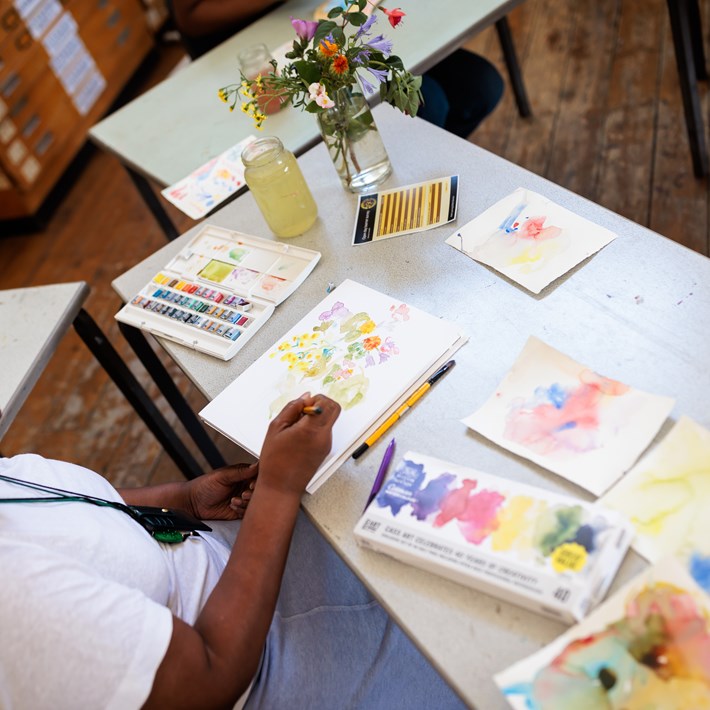
Stretching paper and learning about the variety of paper. Colour mixing and theory, Exploring the techniques of watercolour e.g. washes, bleeding, drying times, wet on wet, pigment granulation, wax resist and taking out pigment. Incorporating structure with pencil and ink, drawing, observational skills, perspective and composition. Art history will give context.
Who is this course for?
This course is open to all who are interested in learning how to paint with watercolours. Both experienced students and beginners are welcome.
What skills, knowledge or experience do I need to start this course?
None, this class is for all abilities. Experienced students can refresh their skills and new learners can pick up skills.
What should I be able to do by the end of the course?
Demonstrate good drawing and observational skills. Stretch paper. Lay out a methodical palette. Use wax resist as a method for structure Incorporate structure with ink and water based pencils. Draw and paint directly with the brush. Paint directly with a size 12 round brush. Understand the uses of different shapes and size brushes Make a variety of marks with a size 12 round brush. Understand the quality of transparency in water colour painting. Demonstrate the use of a cotton rag as part of technique. Develop the control and flow of water.
How is the course organised?
Whole class talks covering resource materials, methods and examples. Practical work with individual discussion. Practical activities. Tutor demonstrations. Working outdoors.
What extra study or practice is expected outside of the class?
Keep a small sketchbook. Take notes. Homework when time allows. Look at artists in the cannon of art history.
How will my progress be assessed?
Individual teaching. Group evaluation. Question and answer. To complete exercises given. Profile and Learning Journal.
What can I expect to go on to after this course?
Use your work to contribute to your portfolio which you may use to apply to higher level courses in adult, further or higher education. Work independently for pleasure. Use knowledge of colour mixing, composition, perspective, observation and art history to bring to other art disciplines e.g. interior and fashion design, architecture, stained glass and jewellery.
Are there any other costs and what do I need to bring?
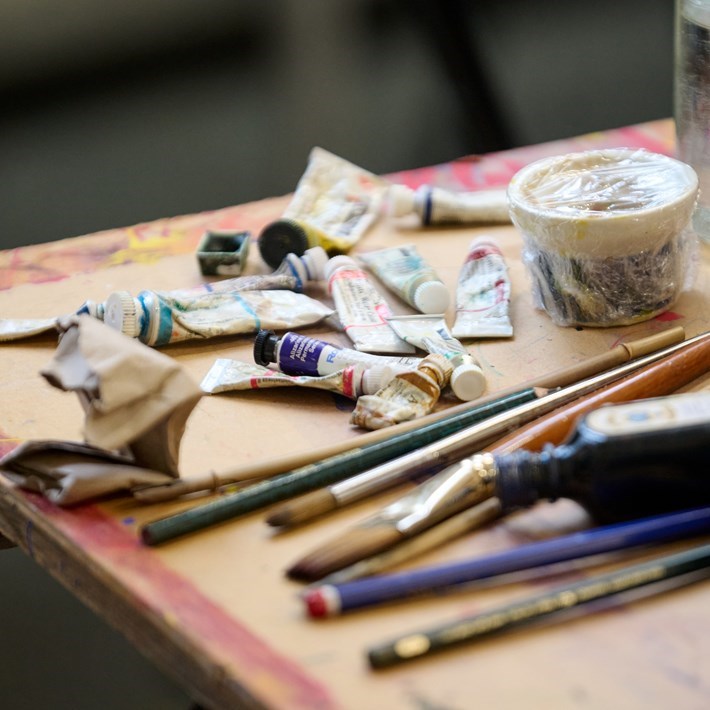
You will need to bring your own paints and brushes although we have a limited supply for those who have none. A small notebook and/or sketchbook. We supply a basic watercolour paper but if you want higher quality paper you will need to purchase this from and art materials shop. A cotton rag. A large plain white plate for using as a palette would be useful.
What support is available?
Details of all available support can be found on our website (https://www.hfals.ac.uk/information-advice), in the Guide and the Student handbook, or from teaching or reception staff.