What will the course Cover?
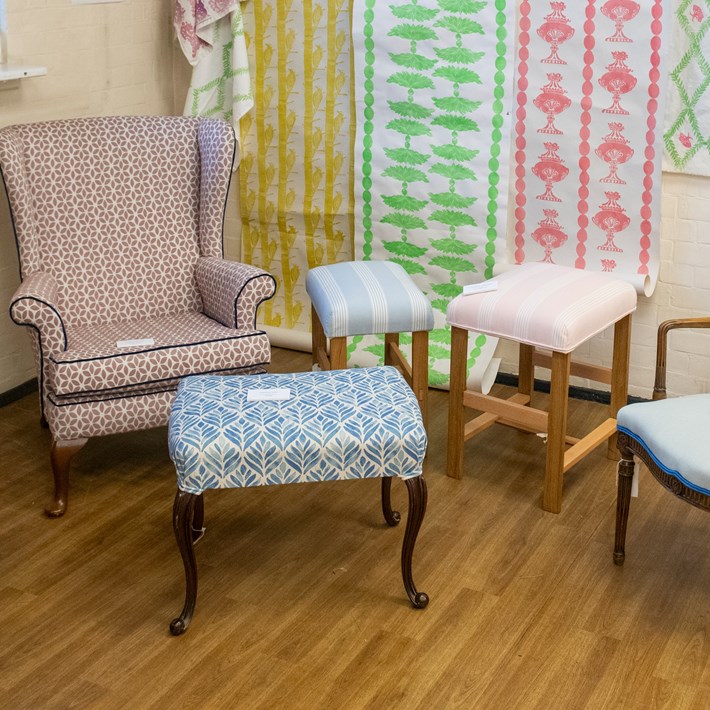
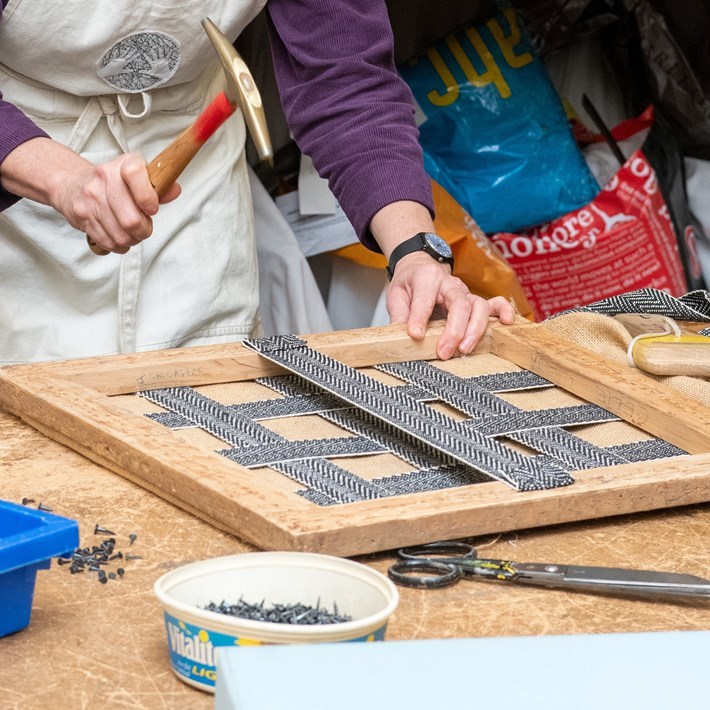
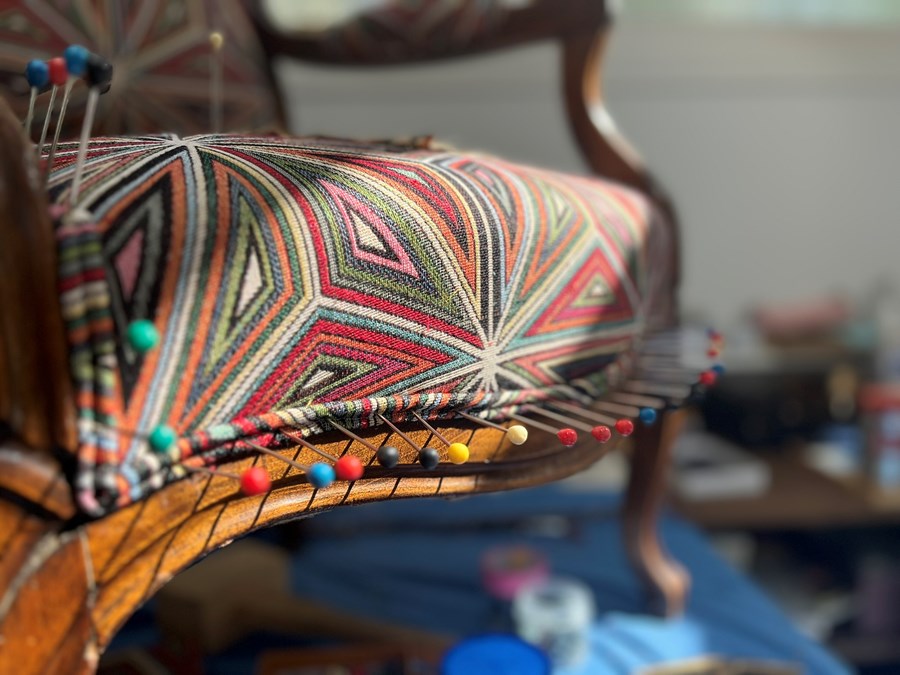
Using both traditional and modern methods, this practical course introduces the essential upholstery techniques for re-upholstering furniture. You will learn how to work safely with specialist tools and equipment. You will explore a variety of materials including fillings, webbing, and suspension systems. The course also covers creating cutting plans, stitching, removing existing upholstery and assessing frames for damage and repair. Beginners will start with a simple project - such as a stool, drop-in seat, or basic chair - before progressing to more complex pieces once the first item is complete. Students with prior experience can build on their skills and tackle more advanced techniques in their own projects.
Who is this course for?
All levels including beginners.
What skills, knowledge or experience do I need to start this course?
No previous experience is necessary.
What should I be able to do by the end of the course?
• Identify and safely use specialist upholstery tools, applying appropriate Health and Safety procedures in the workshop. • Recognise and select suitable materials and components for upholstery projects, including three types of fillings, upholstery materials, suspension systems, and various webbing, staples, tacks, and hessian types. • Plan and prepare for re-upholstery by producing accurate cutting plans, positioning fabric correctly with regard to pattern and pile and removing existing upholstery sympathetically. • Apply practical upholstery techniques, such as attaching webbing, using blind and top stitches to create even edge rolls, and stitching by hand or machine. • Evaluate completed projects, assessing frame condition, repair needs, and overall quality of work.
How is the course organised?
There will be practical demonstrations, formal instruction, workshop practice, individual tuition and peer feedback.
What extra study or practice is expected outside of the class?
Keeping workshop learning journal up to date, with written notes. Providing material for projects.
How will my progress be assessed?
Feed back from your tutor on project work and progress recorded on your Individual Learning Plan and Learning Journal.
What can I expect to go on to after this course?
Continue on this course to develop your skills further or take an upholstery – continuers course or use course documentation and photographs to contribute to a portfolio for application to higher level Upholstery courses in HE.
Are there any other costs and what do I need to bring?
You will need to bring your own piece of furniture and pay for materials used. Standard workshop tools and equipment are provided for use in class. You should bring your own top fabric and trimmings, as well as a notepad and pen. Important notes: So that furniture items can be accommodated, the suitability should be made in discussion with the tutor at the first session. Vacuum and treat items with a proprietary moth spray before bringing them to Macbeth to reduce the risk of moths being brought into the workshop.
What support is available?
Help with literacy and numeracy is available through the basic education programmed and the ESOL programme offers help for speakers of other languages. Additional support can be provided for students with learning difficulties and/or disabilities. Details are available in the Guide or from teaching or Reception staff.
Tutor - Monica Delgado
Monica qualified as an architect in Mexico. She has completed the three stages of the renowned Association of Master Upholsters and Soft Furnishings (AMUSF) diploma. With expertise in both traditional and modern techniques, she supports learners of all levels in developing practical skills and confidence. For the last four years, she has taught at the Macbeth Centre in Hammersmith, where she combines a passion for craftsmanship with a strong design sensibility.